
Provocative co-branding targets the communication, culture, values and behaviors of Generation Z. If we are empathetic and want to pick up our target group, this article is essential for you.
Frank Keuper, C-Level Coach at Ihr Coaching Institute and Managing Partner TRANSTECHTURE
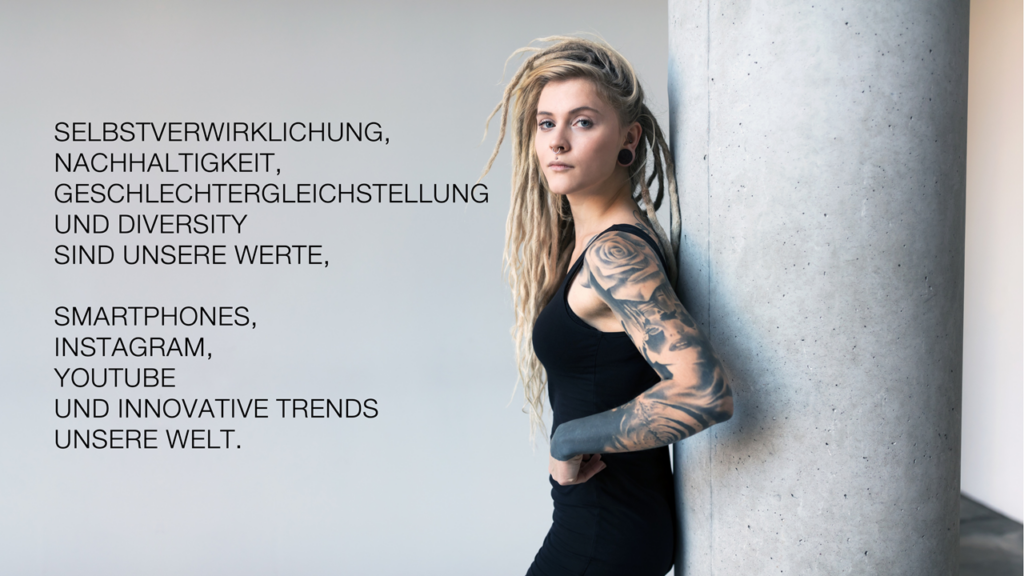
Provocative co-branding: advertising perception of Gen-Z
Advertising must be perceived positively by Generation Z and have a corresponding effect. According to Kantar Millward Brown, it must take nine points into account.
1. unobtrusiveness
2. social media first
3. music and film to accompany the communication flow
4. short communication message
5. creative Communication
6. mobile first
7. high-speed emotionalization
8. high quality design and outstanding aesthetics
9. local campaign character
The significance of these nine aspects can also be interpreted very well as a requirement for a Generation Z-oriented provocative co-branding partnership. It turns out that these nine preferences of Generation Z can be met almost perfectly in the context of provocative brand or advertising cooperations, e.g. with the genre „German rap“, i.e. with artists who produce German-language rap. You can also read our article about Damage to image.
Provocative co-branding: brand communication
We are all here 24 hours a day, 7 days a week, 52 weeks a year. In other words, we are confronted around the clock with brand communication and advertising from different companies on every conceivable communication channel. From the consumer's point of view, against the backdrop of communication that is largely very interchangeable, the choice is agonizing. It is therefore becoming increasingly difficult to attract consumers' attention and arouse their interest. Brands must therefore come up with something to stand out and differentiate themselves.
Some companies, such as „True Fruits“ or „The Female Company“, which primarily have a younger target group in mind, rely on bold, provocative co-branding with the aim of generating emotions through communicative friction and emotionally charging the brand or product. Want to know more about Hybrid models experience?
Creative and inspiring co-branding, e.g. with a provocative artist, attracts a high level of attention and can have a strong impact on the brand image.
No. 5: „Creative communication“ is important!
Brand perception is changed, the positive attitude towards the brand is strengthened, brand loyalty is increased and sales figures are boosted. Provocative co-branding strategies can therefore gain everything, but also lose a lot. Due to the influence of digital media, it is crucial to focus on content management and content supply as part of brand building in order to address target group-specific content to the target group-specific touchpoints.
Pure provocative co-branding
If a company has the Generation Z (and Y) target group in its current or prospective focus in terms of brand strategy, co-branding with the Genre German rap be quite attractive because 75 % of Generation Z (and 60 % of Generation Y) like the genre.
No. 9: „Local campaign character“ is important!
A product placement in a Rap video can thus open the door to one of these target groups.
No. 3: „Music and film to accompany the communication flow“ are important!
A challenge for co-branding with a rapper could - however - lie in the lyrics and the habitus of the genre. These are not always mainstream!
Would you like to benefit from the use of coaching in your company?
Arrange a free initial consultation now! Our experts will be happy to advise you.
„You're a rag, like old towels. Your mom wants to be banged? Sponge over it!“(SpongeBozz, 2013, qualification)
This exemplary text passage illustrates the challenges that can arise in a provocative co-branding partnership with the genre „German rap“. Are the lyrics and realities of life in rap consistent with the values of the key target groups of Generation Z and the brand values of the potential co-branding partner?
Provocative co-branding - Generation Z target group
If, for example, Generation Z (post-millennials or centennials) is considered a cohort whose members were born between 1995 and 2010, around 11.32 million people belong to this generation. Of course, Generation Z is not a uniform or homogeneous group. Its members have also grown up differently, have diverse expectations and unequal access to technology. Nevertheless, the digital world is the defining factor of Generation Z. As digital natives, their communication behavior differs fundamentally from other generations.
3.7 hours Generation Z users hang out every day in front of their smartphone.
No. 6: „Mobile First“ is important!
Precisely because communication with the peer group takes place predominantly via audiovisual platforms such as Instagram or YouTube.
No. 2: „Social media first“ is important!
The affinity for new technologies and the use of social media is accompanied by an increased consumption of information - and an early recognition of global trends. A strong pronounced awareness for global warming and the pollution of the oceans by plastic packaging results in a high demand for sustainable products.
It goes without saying that members of Generation Z want to be perceived as innovators in products and trends, as this is an expression of personal success for them. Family is particularly important to Generation Z, closely followed by health and their own self-realization. Furthermore, gender equality and diversity are seen as Essential values and demanded their acceptance.
No. 10a - latest provocative co-branding: „Considering Z-values“ is important - ... actually!
As you might imagine, self-actualization, group affiliation and personal success played a major role in the emergence of hip-hop. Hip-hop, and therefore rap as a weapon in the hip-hop battle, emerged in the 1970s in the Bronx borough of New York, with rap being one of four weapons in the creative battles of the street gangs.
„With you, He, she, it means: The S has to go. For me, He, she, it means: sex for three.“ (KC Rebel, 2013, Kanax in Paris)
Gangster rapper as co-branding partner
Since around 75 % of Generation Z like the genre „German rap“, a Brand placements in rap passages both rejuvenate the image of the advertising brand and strongly emotionalize the brand.
No. 4: „Short communication message“ is important!
However, there is also a risk of brand dilution over time - if the artist opens up more to other brands - which can happen very quickly due to the exponentially increasing commercialization of the genre and the low controllability of the protagonists.
Especially as German rap is growing, growing and growing. This is shown by the very high and extremely positively developing streaming figures (currently second place among the genres with the highest turnover). In order to reach a young target group, the verbal mention of a brand in rap passages or the visual positioning of the brand in videos as product or brand placement for companies is just as interesting as sponsoring hip-hop festivals or celebrity endorsements.
No. 7: „High-speed emotionalization“ is important!
„Look at me, I'm Nike Air, Prada and a bit of Adidas, you're Aldi, Kodi and a bit of Karitas.“ (Fard, 2013, Fire over Germany 2)
Whereas the advertisement before the rapper's „Zart“ video Nimo draws attention to the co-branding partnership with the chocolate brand Milka. Havana Club, on the other hand, advertises its limited editions with Nura and Kelvyn Colt. You can also read our article about Stress.
Conclusion
Provocative co-branding is not a topic that can be reduced to a simple formula. The most important findings from this article:
- Professional support makes all the difference: Whether in a business or personal context - an experienced coach measurably accelerates development processes.
- Individual fit counts: There is no one-size-fits-all solution. The right method and the right coach are crucial to success.
- Act now: Knowledge alone changes nothing. The first step is always the most important - and often the most difficult.
If you are ready to take the next step, we are at your side as experienced sparring partners. A non-binding initial consultation will clarify whether and how we can support you.
What is provocative co-branding and what impact does it have on the brand image?
Provocative co-branding is a marketing strategy in which two or more brands work together and deliberately convey a controversial or polarizing message in order to attract attention and strengthen the brand image. The impact on brand image can be both positive and negative. A successful provocative co-branding campaign can have a positive impact on the image of the brands involved and lead to an increase in brand awareness and sales. However, there is also a risk that potential customers may be put off by the controversy or perceive the campaign as inappropriate, which can have a negative impact on the brand image.
Which companies have successfully practiced provocative co-branding in the past and how did they implement it?
There are many examples of companies that have successfully implemented provocative co-branding. One well-known example is the collaboration between Nike and Apple, in which Nike+iPod Sport Kits were developed. Another successful collaboration was the „Got Milk?“ campaign by the California Milk Processor Board and the American Dairy Association. It conveyed the idea that milk is the perfect thirst quencher when you run out of milk. The campaign was so successful that it became a cultural phenomenon. Successfully implementing a provocative co-branding campaign requires a deep understanding of the target audience, brand identity and company values.
How can a company avoid provocative co-branding backfiring and damaging its image?
Companies should proceed carefully when implementing provocative co-branding and conduct a thorough target group analysis. It is important that the controversial message is consistent with the company's brand values and identity and that any potential negative impact on the brand image is carefully considered. Clearly communicating the message and being transparent about the collaboration can help ensure that the campaign is perceived positively. Companies should also pay attention to feedback from customers and stakeholders and respond quickly and effectively to negative reactions where appropriate to protect the brand image.
How long does a typical coaching process take?
A typical coaching process comprises 8-12 sessions over a period of 3-6 months. The exact duration depends on the individual goals and progress. Initial results can often be seen after 2-3 sessions.
How can I recognize a reputable coach?
Look for recognized certifications (ICF, DBVC, DCV), sound training, demonstrable professional experience and transparent methods. A reputable coach offers a non-binding initial consultation and works with clear agreements.
What is the difference between coaching and therapy?
Coaching is future-oriented and focuses on achieving goals and developing potential. Therapy, on the other hand, treats mental illnesses and focuses on the past. Coaching is aimed at healthy people who want to develop further.
Can coaching also take place online?
Yes, online coaching is just as effective as face-to-face coaching. Studies show that the coaching results are comparable regardless of the format. Online coaching also offers flexibility and time savings.
Would you like to benefit from the use of coaching in your company?
Arrange a free initial consultation now! Our experts will be happy to advise you.
About the author
About the author
Tim S. Tabrizi is the founder and executive coach of Ihr Coaching Institut (Frankfurt). He is a certified executive coach (ICF, DBVC) with over 20 years of experience. He has 35 coaches throughout Germany. LinkedIn profile | Author page → | Ihr Coaching Institut on LinkedIn
Arrange a free initial consultation
Head office: +49 69 7880 7771
Executive Line: +49 174 1614 254
Book an appointment online