
Exponential business models are often associated with our technological progress. But if you take a closer look, you realize the following: Most fundamental changes in terms of exponential Business models or exponential growth is due to something completely different. Are you a born Star Wars fan, like Frank Keuper? Then you will certainly understand the metaphor of the title. Perhaps you already know „the path“ that this article is trying to show you? Because precisely because we are not yet able to leave our limited planet, this article can be an inspiring thought-provoking stimulus. We, from the Coaching Institute Frankfurt, will also be happy to roast you personally on this topic Online or face-to-face.
Senses and consciousness determine 95 % of our everyday life
For the most part, we rarely think outside the box. Limited by our own senses and the unconsciously controlled mechanisms that determine over 95 % of our everyday lives. For a free mind, we need a mind that is at rest. A mind that is stable within itself, strongly reflective and therefore able to recognize inner and outer connections.
„The definition of madness: doing the same thing over and over again and expecting a different result.“
Albert Einstein
What is an exponential business model
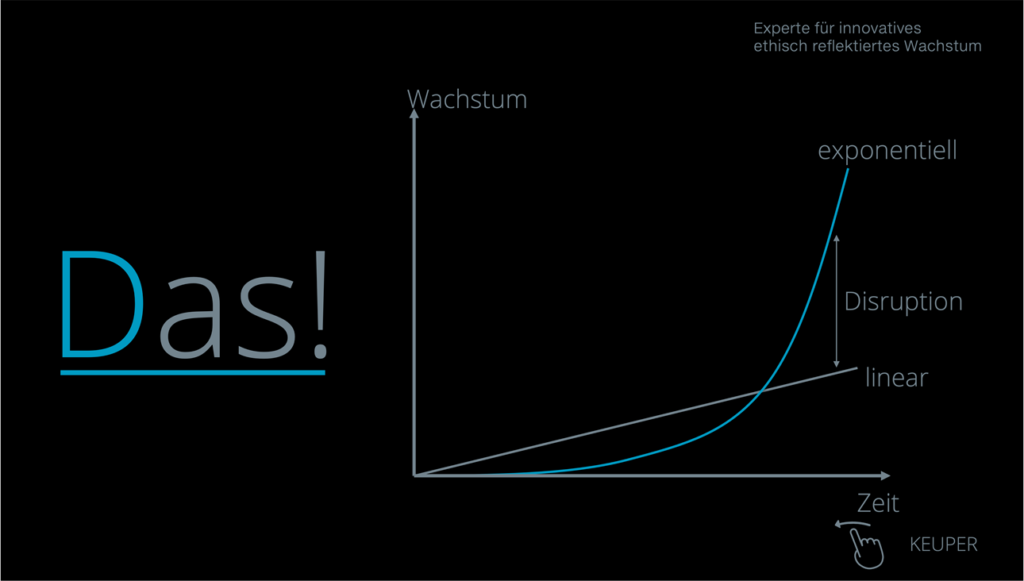
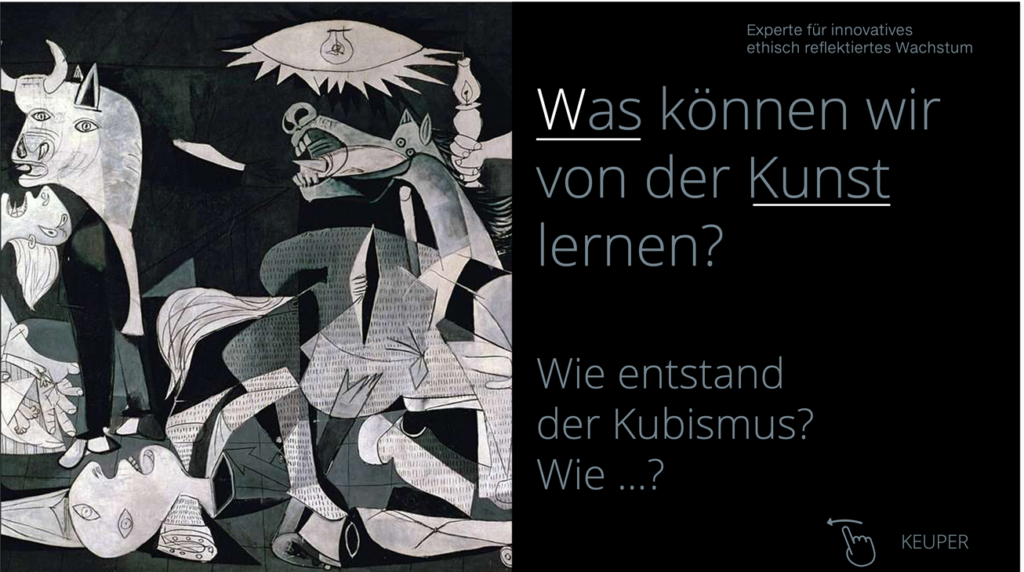
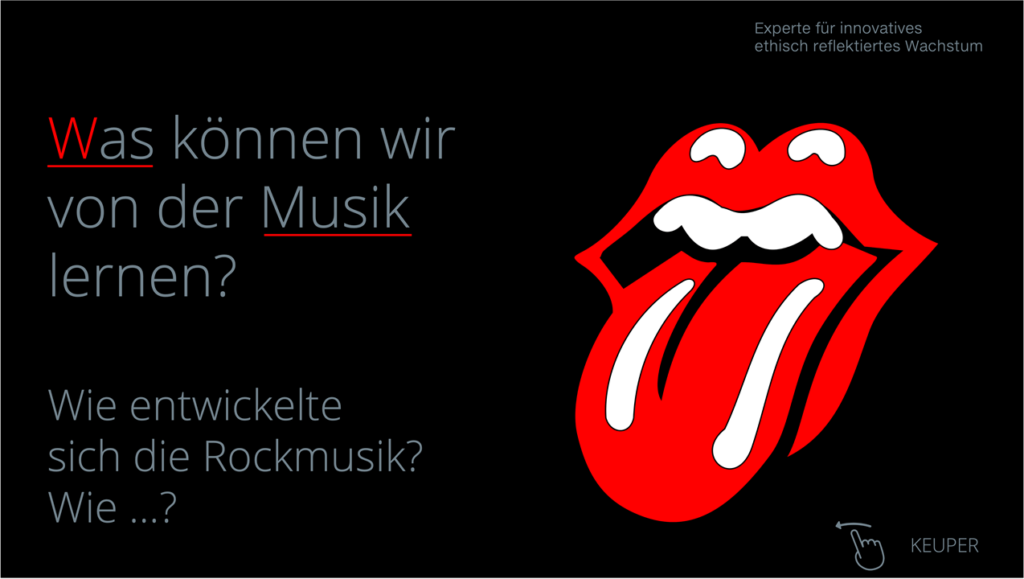
What can we learn from art and music when it comes to exponential business models?
Conclusion
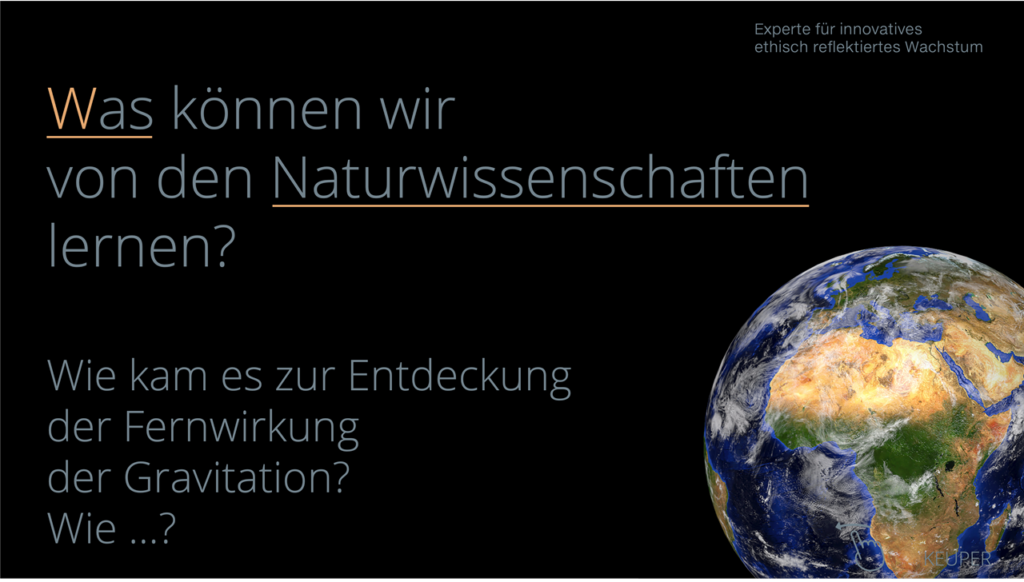
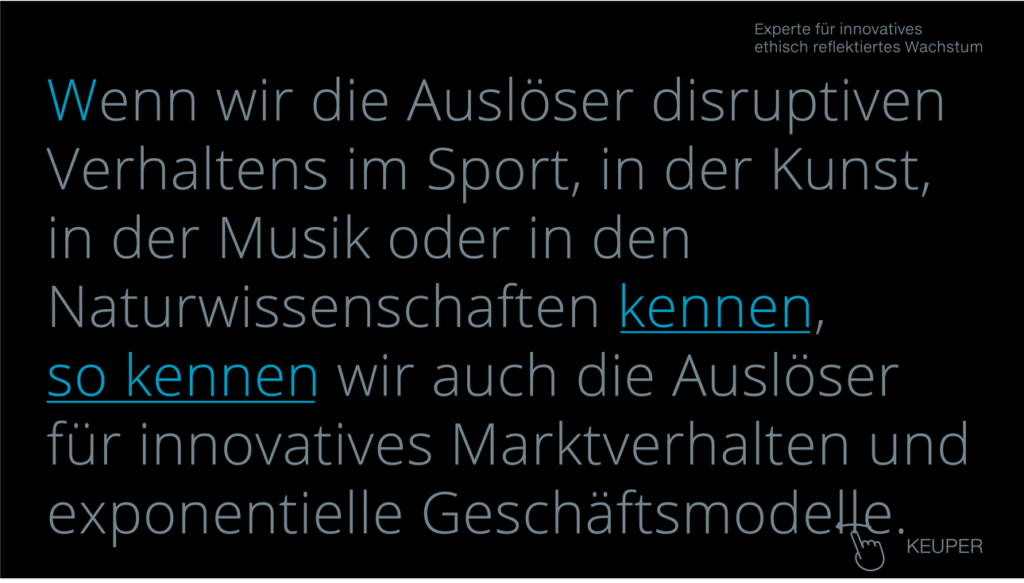
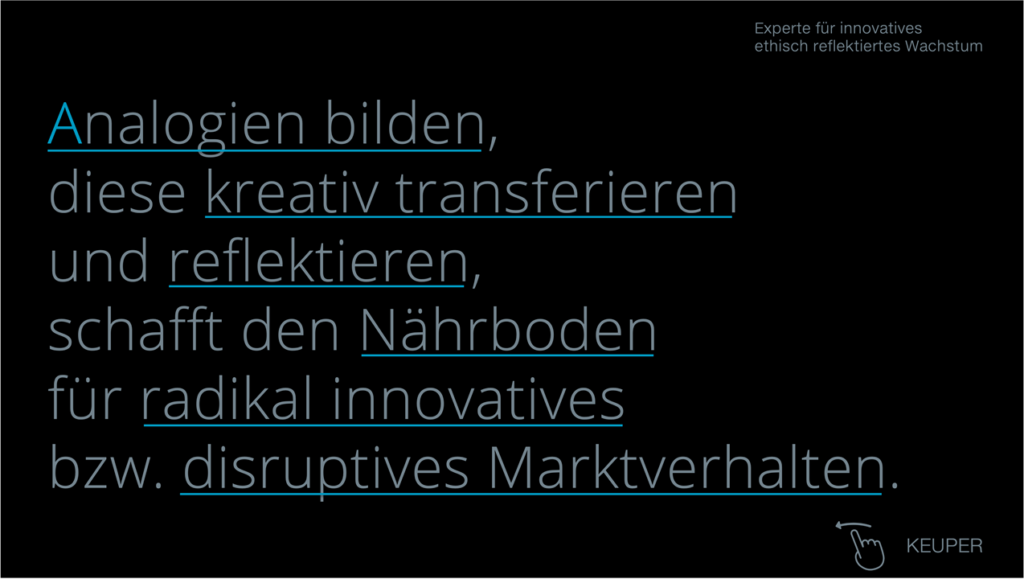
The natural sciences, sport, art and music have all made exponential business models and exponential growth possible. If we remain free in spirit, these models can also be realized in the future. Even on a planet with limited resources.
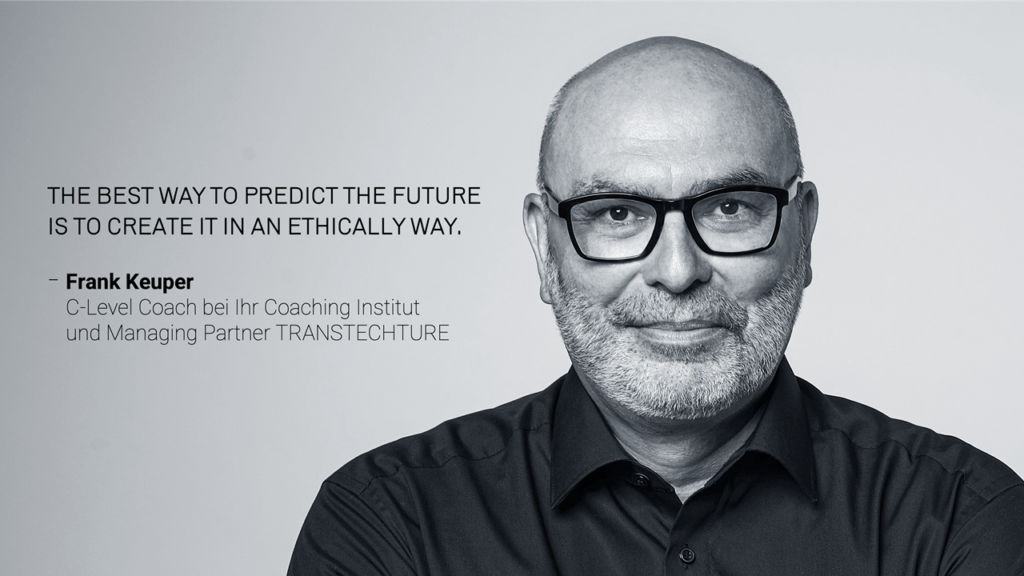
Would you like to learn more about exponential business models and whether Corona has this accelerated or slowed down? Also in relation to the topic of values and sustainability? Then take a look at our other blog posts - especially those by Frank Keuper. With his company Transtecture, he has supported many international DAX companies on their mission to become sustainable, value-oriented and exponentially growing companies.
If you have any further questions, you can contact us directly at any time. There is also the option of individualized top team training on this topic. Our team at Ihr Coaching Institut is ready to help you, from SMEs to DAX-listed companies! Please also take a look at our pages on the following topics Consulting, Personal development and sustainable personal growth to.
Practical tips: How to get the most out of your coaching
The success of a coaching process depends largely on your own willingness and preparation. Before you start coaching, you should take the time to clearly formulate your goals. What exactly do you want to change? What specific results do you expect? The more precise your objectives, the more focused the coaching process can be.
Between the individual sessions, it is important to actively integrate the insights you have gained into your everyday life. Keep a coaching diary in which you record your progress, challenges and "aha" moments. This reflection reinforces the transfer effect and makes your personal development visible. Many of our clients report that the time between sessions is crucial for lasting change.
Be open to new perspectives and be prepared to question habitual thought patterns. A good coach will challenge you without overwhelming you. Trust the process, even if individual steps seem unfamiliar at first. The best results are achieved when you get involved in the collaboration and play an active role in shaping it. Our experience at Ihr Coaching Institut in Frankfurt has shown that clients who have this basic attitude achieve their goals much faster and more sustainably.
Scientific basis and effectiveness
The effectiveness of coaching has been proven by numerous scientific studies. A meta-analysis by the International Coach Federation shows that 80% of coached individuals experience a significant improvement in their self-efficacy. Other studies show positive effects on stress reduction, decision-making quality and interpersonal communication.
Research provides impressive results, particularly in the area of leadership development. A study by the Manchester Consulting Group showed an average return on investment of 5.7 times the coaching budget invested. The improvements were reflected in increased productivity, higher employee satisfaction and improved working relationships.
Neurobiological research explains why coaching is so effective: new neuronal connections are formed in the brain through targeted reflection and new experiences of action. This process, known as neuroplasticity, enables lasting changes in behavior. At Ihr Coaching Institut, we work exclusively with evidence-based methods that put these scientific findings into practice. Our certified coaches combine sound specialist knowledge with many years of practical experience.
The coaching process: procedure and phases
A professional coaching process follows a clear structure that is divided into several phases. In the orientation phase, the coach and client clarify the issue together, define specific goals and agree on the framework for the collaboration. This clarification of the assignment is crucial for later success, as it determines the direction and focus of the entire process.
During the work phase, new perspectives are opened up, resources activated and concrete action strategies developed with the help of various coaching methods. Your coach will ask specific questions to stimulate reflection and support you in developing individual solutions. Between sessions, you put the insights gained into practice and gain new experiences.
The final phase is used for reflection and sustainability assurance. Together, you evaluate the progress you have made, anchor successful strategies and plan the next steps for your further development. At Ihr Coaching Institut, we attach particular importance to careful evaluation so that you can clearly state the benefits of your coaching - both for yourself and for your employer.
Read also: Coaching basics, Executive Coaching Frankfurt
What are exponential business models and how do they work?
An exponential business model is an innovative way of building a business that allows companies to grow faster and more effectively than traditional linear models. The focus is on using technology and network effects to reach a larger audience and achieve higher margins.
In contrast to a linear business model, where success is determined by a direct correlation between resources and production, the exponential model is based on the assumption that growth will increase exponentially if companies pull the right levers.
The exponential business model uses technology and network effects to scale quickly and expand the customer base. By leveraging technology, companies can deliver their products and services faster and more effectively, accelerating growth.
What are the advantages of an exponential business model over a traditional linear model?
An exponential business model offers several advantages over a traditional linear model, including:
Scalability: An exponential model enables companies to scale quickly and effectively without the need for more resources.
Efficiency: By using technology, companies can provide their products and services faster and more effectively, thereby saving costs.
Agility: An exponential model is more agile than a traditional linear model and can react quickly to changes in the industry.
Network effects: By utilizing network effects, an exponential business model can achieve higher customer loyalty and higher margins than a linear model.
Which companies have exponential business models and how have they transformed their industries?
Some examples of companies with exponential business models are:
Uber: Uber has transformed the cab and ride-hailing business with an exponential business model based on the use of technology and network effects. Uber has enabled drivers to deliver their services faster and more effectively and offer customers a better experience.
Airbnb: Airbnb has revolutionized the hospitality industry with an exponential business model based on the use of technology and network effects. Airbnb has enabled landlords to rent out their homes faster and more effectively and offer customers a unique travel experience.
Amazon: Amazon has revolutionized the retail industry with an exponential business model based on the use of technology and network effects. Amazon has enabled customers to order and receive products faster and more effectively, providing businesses with a more effective and efficient distribution model.
These companies have proven that an exponential business model can transform the market and the industry by creating new ways of creating value and customer experience. By leveraging technology and network effects, they have managed to grow faster and achieve higher margins than their competitors.
By transforming their industries, these companies have also set new standards for customer experience, efficiency and innovation. They have shown that it is possible to develop business models based on exponential growth and that they are able to react quickly to changes in the industry.
Overall, the exponential business model is an exciting opportunity for companies to grow faster and more effectively and differentiate themselves from the competition. By leveraging technology and network effects, companies can deliver their products and services faster and more effectively, accelerating growth.
How long does a typical coaching process take?
A typical coaching process comprises 8-12 sessions over a period of 3-6 months. The exact duration depends on the individual goals and progress. Initial results can often be seen after 2-3 sessions.
How can I recognize a reputable coach?
Look for recognized certifications (ICF, DBVC, DCV), sound training, demonstrable professional experience and transparent methods. A reputable coach offers a non-binding initial consultation and works with clear agreements.
What is the difference between coaching and therapy?
Coaching is future-oriented and focuses on achieving goals and developing potential. Therapy, on the other hand, treats mental illnesses and focuses on the past. Coaching is aimed at healthy people who want to develop further.
Can coaching also take place online?
Yes, online coaching is just as effective as face-to-face coaching. Studies show that the coaching results are comparable regardless of the format. Online coaching also offers flexibility and time savings.
Would you like to benefit from the use of coaching in your company?
Arrange a free initial consultation now! Our experts will be happy to advise you.
About the author
Tim S. Tabrizi is the founder and executive coach of Ihr Coaching Institut (Frankfurt). He is a certified executive coach (ICF, DBVC) with over 20 years of experience. He has 35 coaches throughout Germany. LinkedIn profile | Ihr Coaching Institut on LinkedIn | Author page →
Arrange a free initial consultation
Head office: +49 69 7880 7771
Executive Line: +49 174 1614 254
Book an appointment online