
What is transformation?
Transformation is the process of change from a current state to a desired target state over an undefined period of time. A transformation represents a fundamental and lasting change.
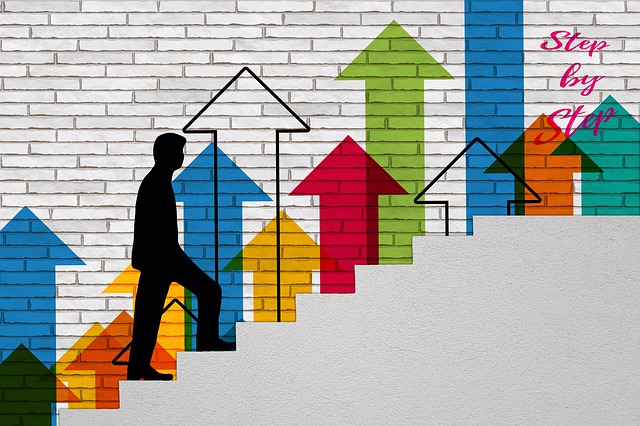
Due to greater technologization and increasing complexity in our business environment, more and, above all, faster changes are becoming increasingly important nowadays. After all, transformation is not an end in itself. In nature, it is not the strongest that survives, but the most adaptable. It is exactly the same in markets. Companies are successful when they constantly keep pace with market requirements and, in the best-case scenario, shape them themselves at some point. Want an example? Just a few years ago, major German cities were literally flooded with bike-sharing bikes. Within a very short space of time, however, the framework conditions changed and the business model was overtaken by road-legal e-scooters. In general, the half-life of business models is increasingly shrinking.
A planned change
Transformation can be understood as a planned reorganization of a company's DNA. It is often associated with a fundamental transformation of a company's relationship with individual stakeholders and its economic and social environment. A transformation fundamentally and sustainably redefines relationships with an organization's stakeholders. It therefore always automatically affects the entire company - not just individual parts.
The best-known and probably most comprehensive social transformation of our time is known as the „digital transformation“. Virtually all organizations - regardless of type, location or market power - are also exposed to it. The entrepreneurial approach to such changes will play a decisive role in determining whether organizations can emerge as winners or losers.
Our coaching supports you in your transformation at a strategic and operational level. We accompany you individually and personally in achieving your goals and desired results. In coaching, we reflect on how you see yourself and others, encourage agile and adaptive approaches and open up many new ideas and solutions by changing perspectives. Benefit from our entrepreneurial experience and best practice cases from other companies.
Transformation and coaching
Companies are in a constant state of change - strategically, structurally and culturally. Even experienced managers and management teams face major challenges. Your main task is to manage the balancing act between the hope for improvement and the fear of the unknown of your employees. Transformation coaching supports you in involving employees at an early stage, making clear decisions and developing your participative leadership style.
Most change processes fail because of the human factor. Only those who manage to convince their employees of the need for Changes and inspire enthusiasm for change can successfully shape transformation. An agile environment requires a different understanding of leadership than traditionally hierarchical organizations. The focus is on leaders who take responsibility, create positive framework conditions, enable the development of potential, empower and motivate their employees and act as a point of contact for them.
Transformation, dealing with complexity
Our transformation coaching offers you support for your decision-making, reflection and implementation processes for a successful transformation. You will learn new skills, how to deal with complexity, how to react flexibly and how to make decisions under uncertainty. We support you: on the job, with shadowing in your day-to-day work, via personal or telephone coaching and sparring throughout the entire transformation process. You gain clarity about the situation you are in, where you want to go and what steps you want to take. In this way, coaching helps you to get behind the problem instead of being driven by it. Find out more about our Approach.
Coaching is not expert advice - because you are your own expert for coherent, well-dosed solutions. Coaching is a solution-oriented process that expands your abilities, opens up scope and transforms patterns through self-discovery and supported self-exploration. Through a different, more differentiated relationship to the so-called „problem“, new, more goal-oriented solution patterns emerge. Find out more in this article about Hybrid working models.
The first step in the coaching process is a resource-oriented clarification of the assignment, in which we discuss with you at eye level what you want to achieve or change. Once you have defined your goal, we create spaces that enable you to develop helpful solutions for yourself. You will be given more options, learn about alternative courses of action and prepare various implementation strategies through trial and error. The coaching process is a moving and sometimes exciting journey of discovery through possibilities that you have never experienced before. It allows for personal growth, especially where it previously seemed difficult. Have you already read our article about Business Coaching read?
Our Coaching-This offer is aimed at individuals, teams and companies who are confronted with new situations or obstacles along the way.
Change or transformation - what's the difference?
Change means the planning and implementation of specific actions that affect either sub-areas or the entire company. Change is often the reaction to certain grievances in the company: Costs too high, turnover too low, production times too long, employee turnover too high, etc. Change is handled like a project. The goal is known in the change. It may be adjusted during implementation. But it always remains clear to everyone involved.
Transformation, on the other hand, refers to a multitude of mutually influencing factors, to the entirety of a socio-cultural system. The aim of transformation is to turn the old into the new, to redefine business models, to reinvent the company. The goals are therefore more visionary in nature. The aim is to redevelop the entire corporate vision and draw a new picture of the future. Transformation is therefore a long-term, ideally never-ending process in which the company constantly reinvents itself.
In short: every transformation is always a change, but not every change is a transformation.
Transformations are more unpredictable than change projects, as they usually affect many business units. The risks are also generally higher with transformations, as even the management does not always know exactly where the journey is heading. Cause and effect are often not deterministically linked. The company is on a broad field for joint learning. This means that some of your employees also need new skills for the transformation. Take advantage of coaching for this.
We are proud to have a strong team of coaching experts with in-depth specialist knowledge and practical experience in the transformation of companies at your coaching institute. Among our trainers and coaches, our clients will find experts for the transformation of organizations and for the development and implementation of Scaled Agile concepts, as well as experts for common agile methods such as Scrum, Design Thinking and Kanban. Have you ever thought about a Business Coaching thought about?
About the author
Frequently asked questions
Practical tips: How to get the most out of your coaching
The success of a coaching process depends largely on your own willingness and preparation. Before you start coaching, you should take the time to clearly formulate your goals. What exactly do you want to change? What specific results do you expect? The more precise your objectives, the more focused the coaching process can be.
Between the individual sessions, it is important to actively integrate the insights you have gained into your everyday life. Keep a coaching diary in which you record your progress, challenges and "aha" moments. This reflection reinforces the transfer effect and makes your personal development visible. Many of our clients report that the time between sessions is crucial for lasting change.
Be open to new perspectives and be prepared to question habitual thought patterns. A good coach will challenge you without overwhelming you. Trust the process, even if individual steps seem unfamiliar at first. The best results are achieved when you get involved in the collaboration and play an active role in shaping it. Our experience at Ihr Coaching Institut in Frankfurt has shown that clients who have this basic attitude achieve their goals much faster and more sustainably.
Conclusion
What is transformation? is not a topic that can be reduced to a simple formula. The most important findings from this article:
- Professional support makes all the difference: Whether in a business or personal context - an experienced coach measurably accelerates development processes.
- Individual fit counts: There is no one-size-fits-all solution. The right method and the right coach are crucial to success.
- Act now: Knowledge alone changes nothing. The first step is always the most important - and often the most difficult.
If you are ready to take the next step, we are at your side as experienced sparring partners. A non-binding initial consultation will clarify whether and how we can support you.
Scientific basis and effectiveness
The effectiveness of coaching has been proven by numerous scientific studies. A meta-analysis by the International Coach Federation shows that 80% of coached individuals experience a significant improvement in their self-efficacy. Other studies show positive effects on stress reduction, decision-making quality and interpersonal communication.
Research provides impressive results, particularly in the area of leadership development. A study by the Manchester Consulting Group showed an average return on investment of 5.7 times the coaching budget invested. The improvements were reflected in increased productivity, higher employee satisfaction and improved working relationships.
Neurobiological research explains why coaching is so effective: new neuronal connections are formed in the brain through targeted reflection and new experiences of action. This process, known as neuroplasticity, enables lasting changes in behavior. At Ihr Coaching Institut, we work exclusively with evidence-based methods that put these scientific findings into practice. Our certified coaches combine sound specialist knowledge with many years of practical experience.
Read also: Management coaching, Digital transformation in Frankfurt am Main
What is meant by What is transformation?
What is transformation? It describes a targeted development process based on scientifically sound methods. The certified coaches at Ihr Coaching Institut support you in achieving sustainable change.
Why is About the author important?
The author's perspective plays a central role in the context of "What is Transformation?". Our experience from over 20 years of coaching practice shows that this aspect significantly contributes to the success of the entire development process.
How do I find the right coach for What is Transformation?
Look for recognized certifications (ICF, DBVC), demonstrable experience, and a good personal fit. Ihr Coaching Institut offers a free initial consultation to help you find the right coach from our team of 35 experts.
How long does a typical coaching process take?
A typical coaching process comprises 8-12 sessions over a period of 3-6 months. The exact duration depends on the individual goals and progress. Initial results can often be seen after 2-3 sessions.
How can I recognize a reputable coach?
Look for recognized certifications (ICF, DBVC, DCV), sound training, demonstrable professional experience and transparent methods. A reputable coach offers a non-binding initial consultation and works with clear agreements.
What is the difference between coaching and therapy?
Coaching is future-oriented and focuses on achieving goals and developing potential. Therapy, on the other hand, treats mental illnesses and focuses on the past. Coaching is aimed at healthy people who want to develop further.
Can coaching also take place online?
Yes, online coaching is just as effective as face-to-face coaching. Studies show that the coaching results are comparable regardless of the format. Online coaching also offers flexibility and time savings.
Tim S. Tabrizi is the founder and executive coach of Ihr Coaching Institut (Frankfurt). He is a certified executive coach (ICF, DBVC) with over 20 years of experience. He has 35 coaches throughout Germany. LinkedIn profile | Ihr Coaching Institut on LinkedIn | Author page →
Arrange a free initial consultation
Head office: +49 69 7880 7771
Executive Line: +49 174 1614 254
Book an appointment online