

Coaching process: Coaching is not a product of chance - it follows a clearly structured process. If a coach or client knows how this process works, they can work in a more targeted way, build trust more quickly and achieve more sustainable results. One of the best-known approaches to structuring the coaching process comes from Dr. Bernd Kochanek, which divides coaching into clearly defined phases - comprehensible, practical and effective.
In this article you will find out:
What phases professional coaching goes through
How the Kochanek process provides orientation - for coaches, clients and customers
Why a structured process is the key to sustainable change
Whether you are a coach yourself, want to be coached or want to use coaching in your company: This overview will give you a solid foundation for coaching in a clear, goal-oriented and ethically sound manner.
Sequence of the coaching process: the phases according to Kochanek
Dr. Bernd Kochanek describes coaching as a goal-oriented, structured process with clearly defined phases. These phases help to ensure orientation and quality in coaching - for the coach and Client:in. Here is an overview of the typical Six phases of the Kochanek model:
1st contact phase - Getting to know each other & clarifying the assignment
In this phase, a non-binding initial meeting takes place. The aim is to build trust, clarify expectations and determine whether cooperation is possible. sensible is.
questions in this phase:
- What is the aim of coaching?
- Are coach and client a good match?
2nd contract phase - Define framework, roles & goals
This is where the coaching contract is concluded - formally or informally. It involves clear target agreements, responsibilities, a time frame and, if necessary, the consent of the client (e.g. company).
Target: A clear, transparent coaching framework.
3rd analysis phase - Understanding the initial situation
The coach and client analyze the current situation together. The aim is to clarify the issue, recognize resources and blockages and identify initial hypotheses or patterns.
Typical methods: Reflection questions, self-images, value analysis, system constellations.
4th target development phase - Develop concrete goals
Now the coaching issue is translated into measurable, realistic goals. The focus is on change, clarity and feasibility.
Important: The goals are always determined by the client - not by the coach or client.
5th intervention phase - Shaping change
This is where the actual coaching process takes place: Patterns of thought and action are questioned, new perspectives are worked out and solutions are developed. The coach selects suitable interventions (e.g. questioning techniques, visualizations, role plays) depending on the situation and objective.
Target: Enable change and strengthen self-efficacy.
6. closing phase - Ensure reflection & transfer
At the end, the results are reflected upon, the process evaluated and the next steps defined. It is often also about sustainable transfer into everyday life - so that the change has a long-term effect.
questions in this phase:
- What have I learned?
- What do I take with me?
- What else is needed?
Conclusion:
The coaching process according to Kochanek offers a clear, practical framework - without being rigid. Each phase has its purpose and enables coaching to be conscious, effective and ethically sound.
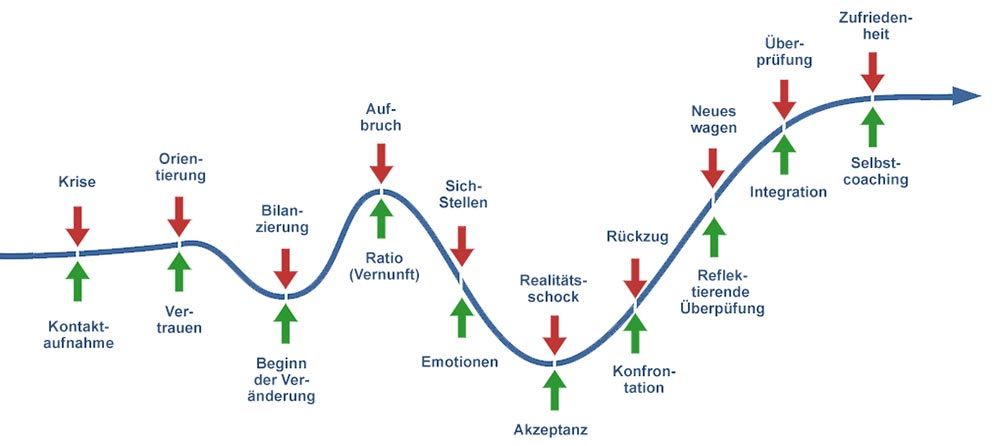
From the very first session: what makes it a successful coaching process?
The foundation for successful coaching is already laid in the first session. Decisive It is essential that the coach and client establish a trusting and appreciative working relationship from the outset. Only in a safe space, in which openness and transparency prevail, can change processes be successful. have a lasting effect.
A clearly structured coaching process - such as Dr. Bernd Kochanek's proven model - ensures that the collaboration is goal-oriented and efficient. This process accompanies coach and client step by step, from the precise clarification of objectives to individual analysis and tailored intervention. This ensures that each session offers clear added value and that progress is measurable.
In addition to the methodology, the active personal responsibility of the client is a key success factor. Sustainable change only occurs when new insights are consciously integrated into everyday life and regularly reflected upon. Coaches provide support as sparring partners, initiators and companions - always with a focus on individual development and self-efficacy.
In short, a successful coaching process begins with a trusting relationship, is based on a clear, structured process and thrives on the active participation of the client. In this way, change and Growth possible from the first session.
Order clarification
Phases of the Kochanek process:
- Contact phase
- Contract phase
What happens in this phase?
The foundation for the entire coaching process is laid during the clarification of the assignment. The coach and client get to know each other and agree on expectations, goals and framework conditions. The coaching assignment is defined in concrete terms and mutually agreed - either directly with the client or with a client (e.g. company).
What needs to be considered?
- Coach: Communicate openly, transparently and honestly. Set clear boundaries, manage expectations and define the assignment precisely. Make consensual agreements to avoid misunderstandings.
- Client:in: Reflect on your own expectations and state them clearly. Be open to feedback and willing to take responsibility for your own process.
Typical problems & obstacles:
- Unclear or unrealistic objectives
- Lack of commitment or motivation on the part of the client
- Unclear roles or expectations between coach, client and, if applicable, client
- Lack of fit between coach and client
Orientation
Phases of the Kochanek process:
- Analysis phase
- Target development phase
What happens in this phase?
The client's current situation and needs are thoroughly analyzed. Resources, challenges and framework conditions are identified together. Based on this, concrete, measurable and realistic goals are formulated, which form the basis for the coaching process.
What needs to be considered?
- Coach: Active listening, asking specific questions, formulating hypotheses and systematically reflecting on them. Provide support without prescribing solutions. Encourage the client to self-reflect.
- Client:in: Be honest and open, question your own patterns and beliefs, get involved in the process. Actively shape your own goals.
Typical problems & obstacles:
- Unclear or contradictory objectives
- Resistance to self-reflection or change
- Avoidance of underlying causes
- Lack of clarity about own needs and priorities

Implementation
Phases of the Kochanek process:
- Intervention phase
What happens in this phase?
The planned measures and interventions are implemented. Coach and client actively work on changing thought and behavior patterns, adopting new perspectives and strengthening action skills.
What needs to be considered?
- Coach: Select suitable methods, take individual needs into account, obtain regular feedback. Maintain a balance between support and challenge. Strengthen motivation and self-efficacy.
- Client:in: Be open to new experiences, show willingness to change, try out and reflect on newly learned things in everyday life.
Typical problems & obstacles:
- Fear of change or failure
- Insufficient self-motivation
- Lack of implementation skills or support in everyday life
- Falling back into old patterns and habits
Final phase
Phases of the Kochanek process:
- Final phase
What happens in this phase?
The coaching is reflected upon and successes and findings are summarized. It is checked whether the goals have been achieved and which steps are necessary for a sustainable transfer into everyday life. If necessary, a final meeting is held with feedback and agreements for the future.
What needs to be considered?
- Coach: Give honest and appreciative feedback, ensure transfer and offer further support options if necessary. Enable reflection on the entire process.
- Client:in: Recognize successes, value your own learning experiences and take concrete steps for the future.
Typical problems & obstacles:
- Incomplete target achievement
- Doubts about the sustainability of the change
- Lack of transfer to everyday life
- Lack of final reflection

What happens if coaching fails?
Coaching can fail for various reasons: unclear goals, a lack of commitment, a poor fit between coach and client, too little personal responsibility or external factors can block the process. If the individual phases are not run through carefully, there is a risk of misunderstandings, frustration and stagnating development.
In practice, a failed coaching process often leads to the desired changes not occurring or only remaining in the short term. The client feels misunderstood or inadequately supported and the coach feels that his methods are not effective. This can have a lasting impact on trust and also inhibit the willingness to engage in future change processes.
It is therefore essential to focus on clear clarification of the assignment, realistic goals, open communication and a genuine partnership in coaching from the outset. If this is not successful, the coach and client should reflect together on whether the process should be adjusted, paused or ended - with respect and a clear attitude.
Case study
A manager books one-to-one coaching that is individually tailored to their professional goals and concerns. The first phase of the coaching process involves a detailed clarification of the assignment. The client's concerns are described in detail and the objectives are defined in concrete terms. This orientation is essential for the further course of action.
The coaching process comprises various phases, which are flexible and individualized depending on the needs and phase of change. In the analysis phase, the client's current situation is questioned and their resources are identified. The coach's approach is geared towards the specific needs and the coaching process.
During the one to two coaching sessions per process, different methodological interventions are used that are tailored to individual needs. The coach supports the client in developing new perspectives and anchoring behavioral changes in the long term. As part of the reflection and review, the next steps are reviewed and determined together.
Coaching is a flexible instrument that is tailored to the client's individual needs and specific concerns. The professional, structured approach promotes change work and strengthens the client's personal responsibility. This enables sustainable development that can be put into practice in everyday working life. Get in touch now!
Read also: Coaching costs & fee, Attitude in coaching, Coaching basics
What is a coaching process?
A coaching process describes the structured path that coach and client take together in order to work on individual challenges and achieve personal or professional goals. It comprises various phases, starting with clarifying the assignment and defining goals through to implementing and reflecting on the changes. The aim is to promote sustainable development and self-efficacy with professional support.
What is step 7 of the coaching process?
Many coaching models have six core phases, but some add a seventh step to the process: follow-up or sustainable transfer. This ensures that the insights and skills gained during coaching are permanently anchored in everyday life. This also includes how the client overcomes possible setbacks and continues to work independently.
What phases are there in a coaching process?
The typical coaching process is divided into several phases:
Contact/order clarification: Getting to know each other and aligning expectations
Contract phase: Defining goals, roles and framework conditions
Analysis: Understanding the current situation and resources
Goal development: define concrete, realistic goals
Intervention: applying methods and exercises for change
Conclusion: Reflecting on successes and ensuring transfer
This structured sequence creates clarity and supports success.
What is the structure of coaching?
Coaching is a goal-oriented process that is flexibly adapted to the client's needs. It begins with a clear goal clarification and agreement, followed by intensive analysis and the development of suitable solutions. The coach uses various methods to open up new perspectives and strengthen action skills. Regular reflection ensures progress before the coaching ends with a final phase in which achievements are secured and next steps are planned.
What is the aim of coaching?
The main aim of coaching is to help people to realize their potential and develop their own solutions to challenges. Coaching promotes clarity, motivation and self-efficacy so that clients can achieve sustainable changes in their life or work - whether in their career, personal development or in dealing with conflicts.
Why is coaching so expensive?
Coaching costs accordingly because it is based on individual support, sound specialist knowledge and experience. Coaches invest time in preparation, intensive discussions and follow-up. They also work confidentially and tailored to the client's needs. Quality, professionalism and personal added value make coaching a valuable and often long-term investment.
What is coaching in a nutshell?
Coaching is professional support in which a coach helps people to find their own answers and goals. It is not advice in the traditional sense, but a process that promotes self-responsibility and development through questions, reflection and impulses. This enables clients to better master their individual challenges.
How does systemic coaching work?
Systemic coaching always looks at people in the context of their social systems such as family, team or organization. The coach helps to understand interactions and relationships and to adopt new perspectives. Targeted questions and systemic methods are used to activate resources that enable the client to find sustainable solutions and initiate change in their environment.
What types of coaching are there?
There are numerous coaching formats that vary depending on the target group and topic. Examples include
Systemic coaching: Context-related consideration of problems
Each type uses specific methods and focuses on different areas of development.
We support you and use our experience to shorten the process. So that you no longer allow yourself to be determined by uncertainty, but guide and shape your life yourself!
Life coaching: personal development and life goals
Business coaching: Professional challenges and career planning
Executive Coaching: Leadership development
Team coaching: improving collaboration
Career coaching: orientation and job change
About the author
Tim S. Tabrizi is the founder and executive coach of Ihr Coaching Institut (Frankfurt). He is a certified executive coach (ICF, DBVC) with over 20 years of experience. He has 35 coaches throughout Germany. LinkedIn profile | Your coaching institute on LinkedIn | Author page →
Arrange a free initial consultation
Head office: +49 69 7880 7771
Executive Line: +49 174 1614 254
Book an appointment online